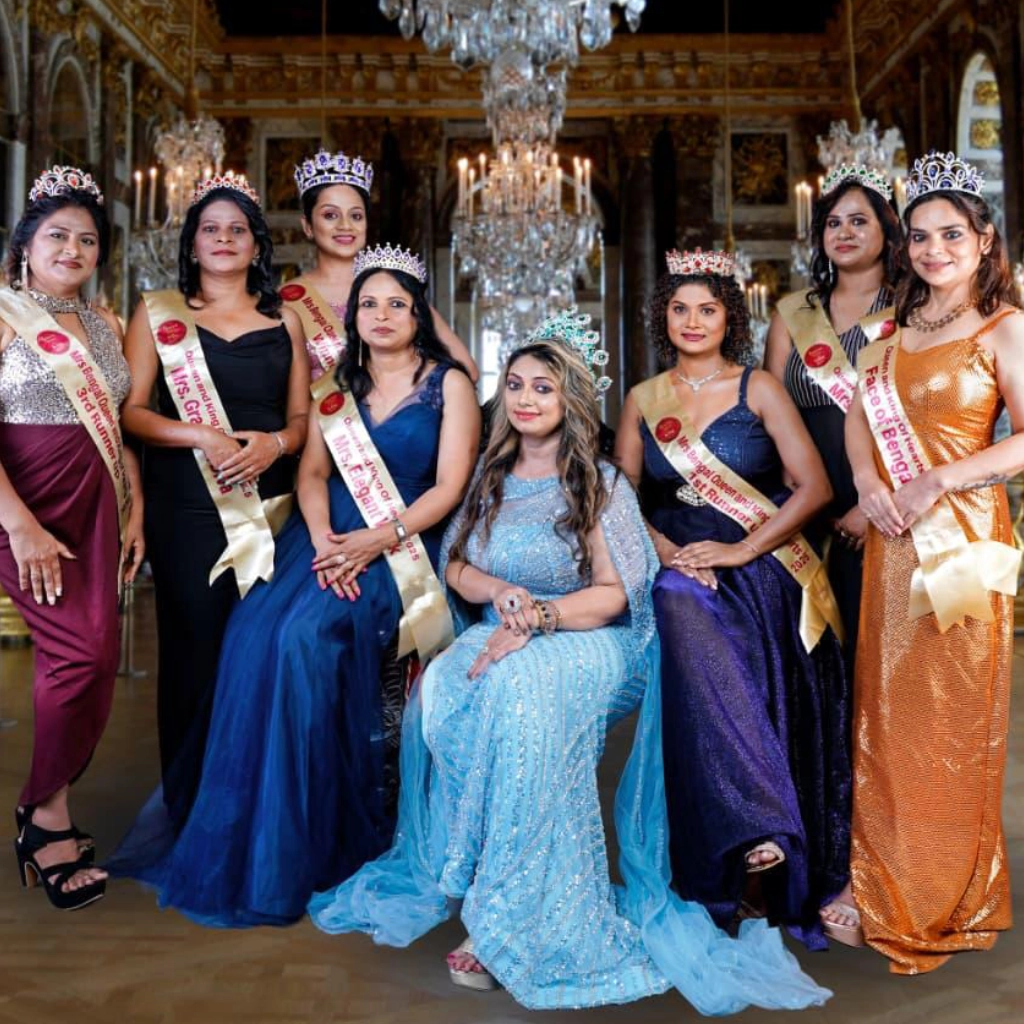
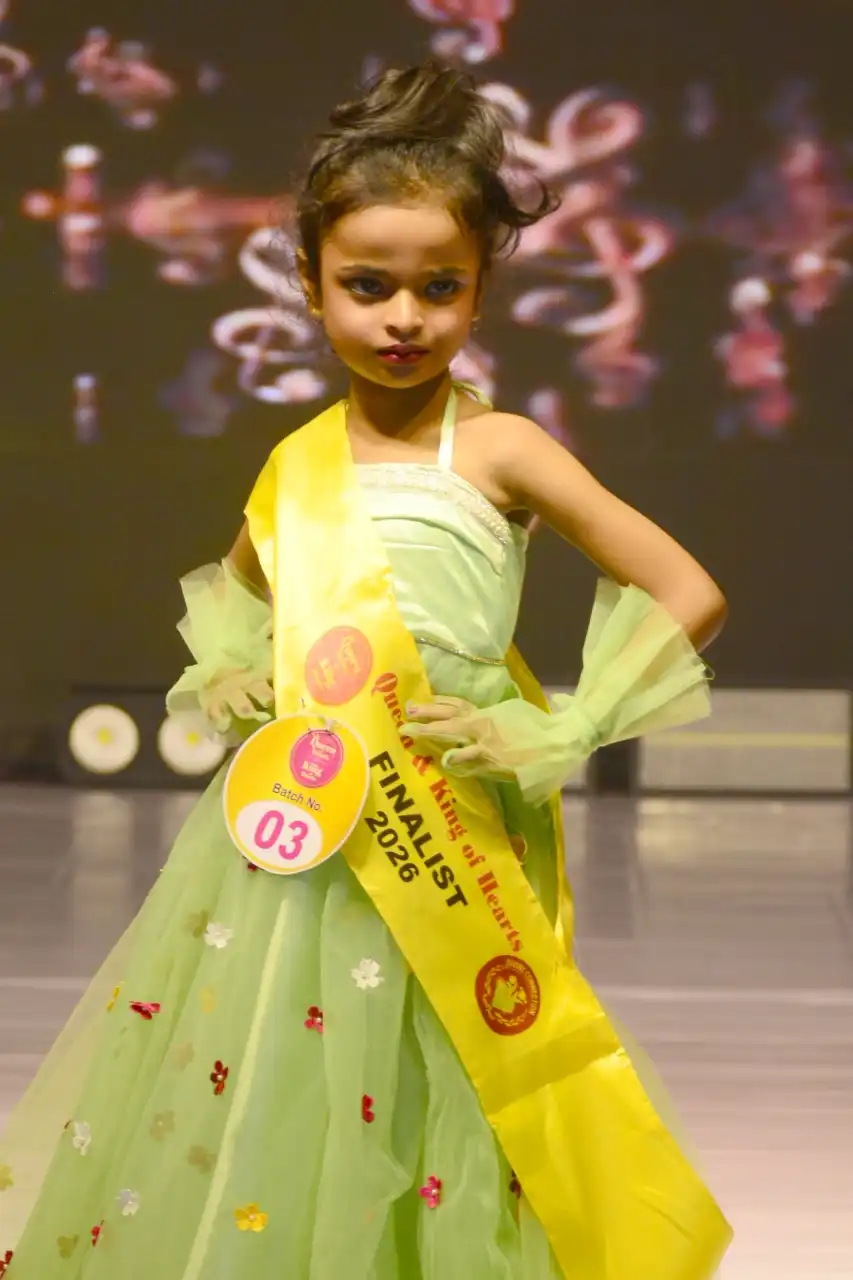
Children walking the ramp at a kids beauty pageant in Kolkata with judges, crowns and stage lights
Kids Beauty Pageant Show

Kids Beauty Pageant in Kolkata: Confidence, Stage Presence & Real Growth.

The first time most Kolkata parents type this into a search bar, they are not dreaming of crowns. They are worried. Worried that their child will be pushed into something overwhelming, judged on looks by strangers, or that a registration desk will ask for money and hand back nothing. That anxiety is fair, and it shapes every decision that follows.

This guide covers what a kid's beauty pageant in Kolkata actually involves, from the age groups and the four rounds to the fees, the rehearsal schedule, and the way judges actually score a five-year-old. Read it with your son or daughter beside you, then decide honestly whether this is the right season for your family. A pageant works best when a child wants it, not when a parent projects it.

Why Kolkata Parents Look for a Kids Pageant at All

Three years ago, a Salt Lake mother told me her daughter refused to speak in class. The child was seven, sharp with numbers, quietly brilliant, and completely invisible whenever a teacher called on her. Within four months of joining a kids pageant, she was standing on a stage in front of two hundred people and introducing herself without a script. She is nine now and still remembers that more clearly than any school prize.

That is the real promise, and it is worth separating from the glitter. A well-run pageant gives a child three things school rarely does: an audience they cannot hide from, a rehearsal that turns nerves into a habit, and a title they earned rather than were given. Confidence built that way travels. It shows up in interviews, in sports, and in how a child answers a stranger on the street.

There is a second reason, and parents are honest about it. Modelling circuits in Kolkata open doors; classrooms do not. A child who has done a professional ramp walk, a photographer's session, and a stage performance has a portfolio casting directors recognize. Several leading child modeling studios in the city take their youngest intake from pageant circuits rather than open casting calls.

What the stage cannot give is a shortcut. Many parents searching for kids' beauty pageant Kolkata options hope to launch a child starlet in one season. That expectation is where disappointment comes from. The children who benefit are the ones whose parents treat the pageant as a rehearsal for life.

Age Groups, Eligibility, and Who Can Enter

Most Kolkata pageants divide the children's category into bands rather than running one open group, because a three-year-old and a twelve-year-old are not comparable on a ramp. A typical split runs 3 to 5, 6 to 8, 9 to 11, and 12 to 14, with separate crowns for boys and girls in each band. Some editions add a mother-and-child or twin round, which parents tend to love and judges score on coordination.

Eligibility is usually simple. Indian nationals and children of Indian origin residing in India can apply. A birth certificate or Aadhaar copy is required for age verification, because the band you enter decides which sub-titles you can compete for. Forms ask for two or three recent photographs, a parent or guardian's consent signature, and the registration fee.

Health matters. Organizers commonly state that a child should be physically and mentally fit to take part, and a good one will also tell you plainly that an unwell child may be advised to sit out a round. Disclose genuine conditions such as asthma, food allergies, or sensory sensitivities, because stage lights and loud sound affect some children far more than their peers.

One gap worth naming: the page you are comparing does not publish its age bands, and neither do several Kolkata pageants online. Ask for the band structure in writing before you pay. If the organizer cannot tell you which group your child will be judged in, you are not dealing with a structured contest.

The Rounds Every Kids Contestant Walks

Children's pageants in Kolkata run four or five rounds, and each tests something different. Knowing them in advance lets you rehearse the right thing instead of the wrong thing.

Introduction round. The child walks out, stops at the mark, smiles, and says a name plus a city or a short line. For younger bands that may be two lines maximum. Judges here listen for clarity, not vocabulary. Practise until the walk-up feels ordinary.

Ramp walk and posture. This is the round parents worry about most and the one that is easiest to fix. Shoulders back, chin level, arms loose, steps shorter than you think. A child who walks slowly and stops properly scores higher than a child who races the ramp. Practise in flats, never new shoes, and on carpet before a lit stage.

Theme or traditional wear. Organizers announce the theme weeks ahead, and Kolkata editions usually celebrate regional craft, festive dress, or a color story. Ask whether the theme is a guideline or a rule, because a rule can disqualify an otherwise strong entry.

Talent round. Singing, dancing, a poem, a painting demo, a science explanation. Judges reward a child who commits rather than one who is technically flawless. Rehearse the talent in full so the nerves arrive on stage with it.

Question round and final parade. Older bands answer simple questions about hobbies and school. The final parade is the crowning walk in the title outfit, and score sheets usually weigh personality as heavily as the walk itself.

Registration Fees and What to Ask Before You Pay

Money is the part parents are least comfortable asking about and the part that matters most. A kids pageant in Kolkata commonly charges a registration fee covering audition access, grooming and rehearsal sessions, the event kit, and a participation certificate, with separate charges for optional photo and video packages.

Ask for the breakdown in writing. A single line showing what registration includes is a good sign. A paragraph of add-ons revealed at the venue is a warning. Keep the receipt, because a cancelled event is exactly when you will need to know what you agreed to.

Some editions split the cost into an audition fee and a finals fee, which is common when city rounds run across districts. A few offer sponsor-funded sub-titles that reduce what you pay, and those carry a brand obligation you should accept or decline before registering.

Ask three questions in writing: what is refunded if you withdraw before the finale, what happens if the event is postponed, and whether the fee is transferable to another child. Organizers who answer directly are the ones worth returning to. If a fee is quoted verbally, get it into a message. Nothing here requires you to be uncomfortable.

How Judges Actually Score Your Child

Beauty pageants carry a reputation for judging faces. Children's categories have moved a long way from that, and if you know what is on the score sheet, you can stop worrying about the wrong things.

Typical scoring weights walk and posture, presence and stage confidence, grooming and costume suitability for the round, talent, and an overall impression covering personality and communication. Some editions add a parent's rapport round, where judges watch how a child responds to a parent's cue backstage. That sounds small. It is not, because a child who ignores instructions loses points; no amount of styling recovers.

Panels in Kolkata usually mix a pageant director, a fashion or grooming professional, an educator or child psychologist, and one celebrity or media name. The child psychologist seat matters more than it sounds. That is the person who notices a child frozen in fright and reads it as nerves rather than a lack of talent.

What does not earn points: heavy jewelry, an over-coiffed adult hairstyle, makeup, or a costume bought to impress other parents. Judges see dozens of contestants. A child in a simple, well-fitted outfit who walks well and looks at the judges will outscore a child in an expensive gown being led by the hand. Ask for the scoring criteria at registration.

Costume, Grooming, and Styling for a Child on Stage

A Kolkata parent's first mistake is buying the costume too early. Theme announcements often land two to three weeks out, and a dress cut for a twelve-year-old rarely fits a growing eight-year-old at the finale. Buy after the theme drops, and keep one fallback outfit ready so a delayed delivery does not end the day.

Fitting beats decoration. A frock that skims the knee and does not drag is worth more on a ramp than a heavily beaded lehenga that catches on the stage lip and pulls a child off balance. Test every outfit by walking the child up and down a hallway in it. Shoes must be broken in. Jewelry stays minimal: a small stud, a thin chain, nothing that swings or catches.

Hair should look like the child, only tidier. Girls get a clean braid, a neat ponytail, or soft curls done the night before. Boys get a simple side part with light gel. Makeup should be minimal or absent. A tinted lip balm and a little powder are plenty for older bands, nothing at all for the youngest.

Bring a repair kit and a full backup: one spare outfit, spare tights, a safety pin, a lint roller, plasters, water, and two snacks. Long event days in Kolkata's humidity ruin makeup, hair, and temper in equal measure. A parent who packs a spare outfit is a parent whose child performs twice.

Rehearsal, Practice, and the Week Before

The ramp walk is a physical skill, and like any physical skill, it responds to repetition, not pressure. Most Kolkata pageants provide two to four rehearsal sessions between audition and finale, and those are where the actual learning happens. Attend to everyone. A child who skips rehearsals and arrives on finale night is entering a competition she did not prepare for.

At home, keep practice short and frequent. Ten minutes a day for a week beats an hour the night before. Run the introduction, the walk to a mark, the turn, and the smile. Record a phone video and let your child watch herself. Children correct their own posture faster when they can see it, and the correction feels like hers rather than imposed.

Rehearse the talent in full. A child who sings the chorus beautifully and freezes on the first line on stage has a nerves problem, not a talent problem. Rehearse the failure too, so the child has seen herself recover from a missed cue and knows she can do it again.

Plan the finale morning like a school exam. Earlier bedtime the night before, a normal breakfast rather than a feast, a light snack before leaving, and travel time with a buffer for Kolkata traffic. Rushed children walk badly, and a parent sprinting through a car park at nine o'clock is not calm enough to coach anyone. Rest matters as much as rehearsal, and if your child is unwell, tell the organiser before you travel rather than turning up at the gate and hoping. Every reputable one has a withdrawal clause, and using it is a legitimate parental right, not a failure of commitment.

What a Good Pageant Does for Your Child Afterwards

Judging is one evening. The residue is what a parent should evaluate six months later, when the sashes are in a cupboard and the photos are on a phone. Ask what your child has that they did not have in April.

A structured kids pageant should leave behind a portfolio, a certificate, a short show reel, and a set of corrected habits. That last one is the real return. A child who has learned to stand still while being photographed, to speak to an unfamiliar adult, to walk into a room of strangers, and to accept a result without collapsing, has gained something that outlasts any crown.

Look for grooming that is age-appropriate: ramp walk mechanics, body language, basic etiquette, a short self-introduction. Reject any programme heavy on cosmetics, body-shaming talk, or dieting advice directed at children. That is a warning sign worth acting on immediately, however good the trophy looks.

Media exposure is a two-sided promise. Professional photos and a digital feature are genuinely useful, and Kolkata families routinely use those images for school applications and future portfolios. But coverage should never replace the child's consent. A child who is exhausted and unhappy being photographed has been exposed, not featured.

Safety, Comfort and the Parent's Role on the Day

Children spend hours backstage. Know the environment before you send your child into it. Ask how many children are in each age group, whether a parent may be backstage, and who supervises the dressing rooms. A pageant that keeps parents out without explanation is a pageant to walk away from.

Skin and comfort come up more than you would expect. Glitter, heavy adhesives and costume netting cause genuine irritation on young skin. Do a patch test the week before if the outfit uses glue or latex. Comfortable footwear is not negotiable; a blister at minute three ruins a three-year-old's evening.

Sound and light sensitivity is real. Some children find a pageant's lighting and music genuinely distressing. Ask in advance whether a child may wait off-stage for a round, and use that option without embarrassment. A child who feels safe performs. A child who is overwhelmed does not, and no title is worth that price.

Finally, the results conversation. Whether your child wins, wins nothing, or cries backstage, handle it the same way. Praise effort out loud, acknowledge disappointment privately, and never compare them to another child. Confidence built in a pageant can be destroyed in a lift in ninety seconds.

How to Register Your Child in Kolkata, Step by Step

Registration for a kids beauty pageant in Kolkata takes about twenty minutes once you have the right documents. Most organisers run online forms with a payment link, and the confirmation arrives with a contestant number and a rehearsal schedule.

Step one. Pick the age band and confirm it with the organiser before payment. Score sheets are printed for a specific group, so moving a child afterwards is difficult.

Step two. Gather a birth certificate or Aadhaar copy, two or three recent photographs in clear light, and guardian contact details. Keep digital copies on a phone; email attachments get lost.

Step three. Complete the form accurately. Children's registration forms are short by design, so a typo in a date of birth can move your child into the wrong band.

Step four. Pay and save the receipt and confirmation. Note the refund and postponement terms now, because you will not remember them at eleven o'clock on event night.

Step five. Attend every rehearsal offered. Two sessions of ramp walk coaching is worth more than a new dress.

Step six. Confirm the theme, then shop. Buy after the announcement, keep a backup, and test everything at a walk test in the house.

Questions to have answered in writing before you pay: which age band, which rounds, what the fee includes, the refund policy, whether parents may be backstage, and where results are published. Six answers in one message, and you register with a clear head.

Choosing Between a Pageant, a Modelling Portfolio or a Talent Show

Not every child needs a pageant, and two alternatives are worth weighing honestly.

A kids modelling portfolio is lower stakes and more useful if your child is likely to continue. A professional portfolio shoot in Kolkata gives clean images across casual, formal, ethnic and themed looks, with no judging and no stage fright attached. Many parents start here and move to a pageant two years later, once the child is old enough to handle being scored in front of strangers.

A talent show or dance recital tests stage comfort without ranking children against each other on appearance. For a shy four-year-old, a group performance with twenty other children is often the right first step: real stage time, no crown, no comparison. Confidence built this way is just as durable and costs far less in stress.

Where a pageant wins is when a child wants an identity tied to achievement. Some children are hungry for it. They like the sash, the photos, the introduction, the sense of having achieved something visible. For those children, a structured pageant in Kolkata is a good match, and there is nothing wrong with it.

There is a fourth option that costs almost nothing and is often skipped. Let your child watch a pageant, or attend one as an audience member first. Many six and seven year olds who would have been terrified a year earlier are calm after seeing it happen to somebody else.

Kolkata-Specific Notes for Families Outside the City

A large share of candidates at a Kolkata kids pageant come from outside the city, and logisties decide whether the trip works. Howrah, Kharagpur, Siliguri, Asansol, Malda, Bardhaman and Durgapur families all travel for these events, and the pattern is consistent: audition locally if a district round is offered, and travel for the finale only once your child is through.

Budget for two nights, not one. Rehearsals fall a day or two before the main event, and arriving the same morning means missing the coaching that decides the walk. Book a hotel near the venue rather than commuting from Howrah in event traffic.

Train travel from Asansol or Durgapur is usually easier than road. Tickets to Howrah and Sealdah sell out on event weekends, so book early and take an earlier train than you think you need. Kolkata's event season overlaps with school examination results and Pujo planning, so lock your dates before planning the holiday calendar.

If your family is from outside Bengal, the theme round is worth watching. Kolkata editions frequently draw on Bengali festive dress and regional craft, which can leave an out-of-state child guessing. Ask for the theme in writing and plan early. It is one of the most enjoyable parts of the evening.


Why Choose Us

What Makes Us Different

Prestigious Platform

Prestigious Platform

A nationally recognised beauty pageant offering authentic exposure and credibility.

Professional Grooming

Professional Grooming

Training by industry experts in ramp walk, communication, and confidence.

International Gateway

International gateway

Opportunity to represent India at international platforms.

Elder Care

Media Exposure

Photoshoots, interviews, and digital promotions to build your personal brand.

Pageant Chronicles

Show Highlights & Activities

Become the Next Miss, Mrs & Mr Bengal. Step Up, Shine & Own Your Crown.

Our Pride

Our Crowned Winners

Registrations Open

Queen & King of Hearts
Beauty Pageant 2026

A premium platform for aspiring models and performers. Discover grooming, runway excellence, and global exposure designed to transform confidence into presence.

Apply Now →
Testimonials

What People Say About Us

Our Panel

Judges & Mentors

Our Supporters

Sponsors & Partners

Latest Updates

Recent Blogs & Posts

Stay updated with the latest news, stories, and insights from our community.

Need Help?

Frequently Asked Questions

Get answers to your questions about our services & events. We're here to help!

Then stop, and do not treat it as a problem to solve. Some children love the first evening and want nothing more. Some try it once and discover the stage is not for them, and that discovery is a legitimate outcome that costs you a registration fee rather than something worse. A small number discover the opposite: that the nerves felt manageable once they had rehearsed and that the thing they feared was the thing they enjoyed. Both are fine. The only outcome worth worrying about is a child who continues because the parent is invested in the result, and that pattern is worth breaking early. A nine-year-old who says she would rather not do it again should be believed, and the certificates and photographs from that single pageant remain genuinely useful later, for a school portfolio, an audition, or a cousin's event. Parents who most often regret pushing are those doing so after a disappointing result, because a child who learns that an adult keeps trying despite their discomfort learns a lesson harder to unlearn than walking down a ramp.

More than most parents expect, if you ask early. Children should not be photographed or interviewed by attending media without a parent's consent, and it is reasonable to say no to a reporter who approaches backstage. A parent or authorized guardian should be present during check-in, and you should know in advance who is collecting your child if you are leaving. Ask whether the event has a first-aid arrangement and where it is, and identify the emergency contact the organizer holds for you. If your child has a medical condition, a dietary need, or a sensory sensitivity, it should be written on the registration form rather than mentioned in passing. After the event you should receive whatever was promised: a certificate, a participation kit, and photographs if you paid for them, in the timeframe the organizer stated. Where a title is involved, you should receive the title kit. Whether results are published somewhere you can check is worth writing into your own notes, as is the process for querying one.


Fairness in a children's pageant has three parts, and parents usually worry about the wrong one. Appearance is the least of them, because most panels weigh it lightly, and any competent judge can see a well-prepared walk. What matters is consistency, and that comes from published criteria and a score sheet filled in round by round rather than an overall impression formed in the first thirty seconds. The third part is transparency: results you can query, criteria you can read, and a panel whose names you know. Panels in Kolkata typically mix a pageant director, a fashion or grooming professional, an educator or child psychologist, and a celebrity or media name, and the child psychologist seat does more good than its title suggests, because that is the person who reads a frozen child as nerves rather than as a lack of talent. What does not belong on a children's panel is anyone brought in to promote a product. Read the criteria, watch the same judges across groups, and if results feel arbitrary, ask for the score sheet.

Look for four things and be suspicious without them. First, a published address and a working contact: a phone number, an email, a real person you could answer, and an office you could visit. Organizers run on personal reputation in this industry, and the ones worth dealing with have nothing to hide about who they are. Second, previous editions with photographs, winners by name, and a year attached, ideally from a season you can verify. Third, a clear score sheet or at least a stated breakdown of what is judged, because that is the difference between a competition and a popularity contest. Fourth, a written refund and postponement policy. Two red flags deserve an immediate walk: pressure to pay quickly or a fee the organiser wants kept from your spouse, which is a scam pattern rather than a busy calendar. And a pageant that publishes no winners from previous years has usually not held the events it claims. Ask to speak to a parent whose child competed last season.

Sometimes, the rules are the organiser's rather than a fixed standard. Many platforms allow repeat winners but ask the previous titleholder to compete in an open or senior category instead, so a child can win again without holding the same crown twice. Others restrict consecutive wins in the same band for the same child, which is common where judges want a genuinely open field each year. A few impose a waiting period before a child can re-enter the children's bands. None of this is universal, so check before you plan. It matters most if your child won at seven and would like to try again at eight, a very normal wish worth checking against the rules early rather than after the audition. Parents sometimes ask whether returning two years running looks bad in any way. It does not. Contests are built for repeat participation, and a child who comes back year after year demonstrates commitment rather than obsession. The only pattern worth avoiding is entering every available category in every available edition without pause.

Roughly speaking, yes, and this is one of the more reassuring parts of the industry. Most Kolkata pageants give every registered child a participation certificate, a contestant kit or gift item, and access to professional photographs of the day. Winners add a crown, sash, trophy, or title plaque to that, and depending on the edition, a small cash or voucher prize for the top positions in each band. A few editions also send a nomination letter for a national or state-level pageant, which is worth something to families planning a longer runway. The detail to confirm at registration is whether these are guaranteed for every child or contingent on attendance through the final parade, because that is the one variation that catches families out. A parent who plans to leave after their child's last round should know that in advance. Where the certificate is mailed rather than handed over, ask about the timeline and any charge, because it is a small cost that surprises people. And keep the whole thing, because a school application form in four years' time will ask what your child did, and a certificate with a date on it answers that question better than a memory.

No, and asking the question suggests a confusion worth untangling. A portfolio is a set of photographs. A pageant is a competition. Neither requires the other, though plenty of parents buy a portfolio first as a gentler way into the world of being looked at. If your child is under six, that order usually works well: a portfolio shoot on a Saturday afternoon, then the pageant a year or two later when the child is ready for a stage. If your child is nine or ten and already asking about pageants, register directly and book the portfolio later, because a pageant's own professional photos often become the start of a portfolio anyway. What matters is not the sequence but the intent. A child who entered without any interest in performing tends to have a poor time. A child who entered because they want to be on a stage, with parents who set expectations honestly, tends to have an excellent one. Where a portfolio genuinely helps is in the weeks before an audition, because a photographer who has shot your child knows which expressions read well on camera.


They can be, and often are, but the version matters more than the fact of it. A shy child pushed onto a stage cold will freeze, and the memory of that freeze can take two or three years to clear. A shy child who spends six weeks practicing an introduction with a parent, attending rehearsals with the same children every week, and watching a friend walk first will usually do adequately and often better than expected by the third round. The mechanism is rehearsal turning nerves into a habit, and it is the same one that works for adults in any performance setting. What does not work is surprise. Do not tell a six-year-old the night before. Do not enter a child who has expressed no interest in performing. Do not build the evening around winning; a child managing their own feelings cannot also manage a result. Watch for a slow child warming up rather than pushing a fast one, and set a private goal instead of a title.

Not automatically, and the difference is usually smaller than the marketing suggests. A national platform offers a longer runway, several rehearsal cities, sometimes an international grooming partner, and a shot at representing India abroad. A local Kolkata edition offers something a national event cannot: a name you will recognize at a school gate, judges from the city your child actually lives in, and an event day that does not require a family to uproot itself for a week. The deciding factors are the published criteria and the panel, not the word national. Look for a score sheet you can read, a named judging panel, an age band structure, and a stated refund policy. A national pageant that keeps its criteria vague is a worse experience than a local one that publishes them, because the stakes are the same and the information is not. The other honest question is what happens after. A national title carries a title for a year and a set of contacts. Ask any organizer what happened to last year's child winners in terms of casting and auditions.

The difference is what gets judged. A modelling contest scores appearance, walk, styling, and presence, and it is closer to a fashion audition. A beauty pageant for children adds rounds with nothing to do with looks: a talent round, a question round for older bands, often a theme or traditional wear round, and a final parade judged on overall impression. That second category matters enormously for a young child, because it means a quiet, well-mannered four-year-old who introduces herself clearly can beat a prettier but nervous one. A modelling contest suits a child heading towards commercial work, where a portfolio and casting comfort matter more than a title. A pageant suits a child who wants a title, an evening on a stage, and the training that comes with rehearsing for one. In practice many Kolkata events blur the two, running children's categories inside a broader pageant that includes Miss, Mrs, Mr, and Teen bands. For a child under six, a talent show or group dance performance is often the gentler first step: real stage time, no ranking, and no comparison against an ideal.

Less than the sashes suggest, and more than nothing, which is the honest framing. A title gives your child a story to tell, photographs that look genuinely good, an introduction they can deliver without nerves, and evidence that they set out to do something and finished it in front of strangers. Those things are real, and they do last. What a title does not deliver is a career, a contract, or a shortcut into modelling. Most child pageant winners in Kolkata do not go on to professional work, and any organizer who suggests otherwise is selling you something. The exceptions exist, and they are genuine: children who love performing do get noticed, and a title plus a strong portfolio plus a family willing to keep attending the occasional audition is a reasonable starting position. That combination is rare by accident. The more useful question is whether your child enjoyed the process, because a child who loved the rehearsals and disliked the result will be back next year.

Results follow the score sheet rather than a single judge's memory, which is why a pageant with published criteria is worth more to you than one without. Each round is scored separately by every judge, the scores are totalled, and the highest total takes the crown in that age band. Subtitles, such as "best in talent," "best in traditional wear," or the judge's choice award, are calculated from the same sheets rather than handed out afterwards by favor. Timing varies more than parents expect. Some editions announce results on the same evening within an hour of the final parade. Others hold a short post-event ceremony twenty minutes later. A few publish the list online a day or two afterwards and mail certificates, which is the model most likely to suit families travelling from outside the city. If you need to leave before the announcement, ask at registration whether that is possible and how you would collect a certificate. What you should not do is demand a specific time on the night and then plan a train around it.

Arrive at the stated reporting time with twenty minutes to spare, and expect to be early anyway. Kolkata event traffic is unpredictable, and a family that left Salt Lake on time and reached a central Kolkata venue forty minutes late has still made it. Reporting time usually falls ninety minutes to two hours before the main event, covering check-in, contestant number collection, and the parent's briefing. That briefing is the one session not to miss, because it covers round order, backstage rules, when your child will be called, and where results are posted. Children are usually called in age group order rather than registration order, so your child's slot can move depending on how many are ahead of them. Parents who need to leave should tell staff at check-in who the authorized adult collecting the child is, and make sure that person carries photo ID. Bring water, snacks, a change of clothes, a shawl for air conditioning, and the repair kit.

Yes, and a large share of candidates at a Kolkata kids pageant come from outside the city. Howrah, Howrah Bridge, Kharagpur, Siliguri, Asansol, Malda, Bardhaman, and Durgapur families all travel for these events, and the pattern among families who enjoy it is consistent: audition locally if a district round is scheduled, and travel for the finale only once the child is through. Indian nationals and children of Indian origin residing in India can apply, and a birth certificate or Aadhaar copy is required for age verification regardless of where you live. The logistics deserve a plan rather than an improvisation. Budget two nights, not one, because rehearsals usually fall a day or two before the main event, and arriving the same morning means missing the coaching that decides the walk. Book a hotel within fifteen minutes of the venue rather than commuting from Howrah in event traffic. Train travel from Asansol or Durgapur is usually easier than road, but tickets to Howrah and Sealdah sell out on event weekends.

Banquet halls and hotel ballrooms in the Salt Lake, Rajarhat, and New Town areas come up most often, because the convention infrastructure there is built for this kind of event: large halls, backstage holding rooms, parking for a few hundred cars, and parent seating separate from the stage. Older editions used central Kolkata hotels near Park Street and the Maidan, and several still do, though parking is a real issue for families driving in from Howrah. Outdoor venues appear in the warmer months and appeal to parents who want a shorter, airier event, but they bring monsoon weather, amplified sound, and longer turnarounds between rounds. Whatever the venue, three practical questions decide whether the day works. Can a parent be backstage with the child, or is there a holding room? Is there a separate room for makeovers so children are not made up in a corridor? And how long is the gap between a child's report time and their walk, because an eight-year-old waiting four hours will not walk well at the end of it? Ask all three before you register.

Yes, and many Kolkata families do, but pace it. Two pageants in one season is comfortable for most children. Four or five is not, and the cumulative effect shows up as a tired, bored child by the third event who gives less on stage than she did at the first. Beyond fatigue, there is a real risk of a child developing an association between performing and being pushed, and that association is hard to undo. A better approach is to pick one main pageant for the season, with the title and the runway work you actually want, and treat any other as an experience rather than a competition. If you do enter two, check the dates before paying for anything, because Kolkata's event season collides with school examination results, Pujo planning, and Pujo itself, and the clash is usually with an exam. Also check whether a child who won a title in one edition may carry it into the next, since a few platforms restrict repeat winners in the same band. Tell your child the plan once and stick to it.

Four things cover almost every organizer in Kolkata: a birth certificate or Aadhaar copy for age verification, two or three recent photographs in clear natural light, a parent's or guardian's consent signature on the registration form, and proof of payment. Keep digital copies of all four on your phone, because email attachments get lost in inboxes and a phone copy does not. For photographs, take them against a plain wall in daylight and include one full-length shot, since a close-up portrait alone is often not enough for a judge's records. A school identity photograph works for the documents but not for a portfolio. If your child won a sub-title at a previous edition, have the certificate ready, because some editions give returning contestants priority in audition scheduling. Disclose genuine health conditions at registration: asthma, food allergies, sensory sensitivities, and any medication your child needs. This is not paperwork busywork. Stage lighting, loud music, and long waiting periods affect a sensitive child far more than their peers, and the organizer can only plan around your child if you tell them.

Yes, and this is the commitment that matters most. Rehearsal is where the pageant actually teaches something: the walk mechanics, the mark, the turn, the timing, the costume movement, and the moment to smile. A child who misses rehearsals and arrives on finale night is entering a competition she did not prepare for, on a stage she has never walked, and in front of judges she has never faced. It is not impossible, but it is an unnecessary risk to take on a child's behalf. Where a scheduling conflict genuinely cannot be avoided, some organizers allow a makeup session or share rehearsal notes, and a short run-through at home helps. Ask the organizer in advance what the attendance expectation is, because the answer tells you how seriously the pageant takes its own preparation. Parents frequently describe rehearsals as the part they enjoyed most and often as the reason their child was still smiling at the finale. Practise at home too, in short daily sessions rather than one long night before.

Plan for six to ten weeks in a typical Kolkata season, though a district-audition edition can compress that to four. The sequence runs registration, then audition, then a result, then two to four rehearsal sessions, then the finale. Auditions are commonly held on weekends at a Kolkata hotel or banquet hall, and the parent briefing before them is worth attending even when you are short on time, because the round order, backstage rules, and reporting time get explained there once and not again. Between audition and finale you receive the theme announcement, which is when costumes get bought, and that leaves two to three weeks. Rehearsals often fall on a weekday evening or a weekend day in the week before the event, which is the detail families from outside the city get wrong most often. If you travel from Howrah, Kharagpur, Siliguri, Asansol, Malda, Bardhaman, or Durgapur, budget two nights rather than one, and treat the rehearsal day as fixed until the organizer confirms otherwise. Missing rehearsals to save one night's hotel is a false economy.

Three years is the usual floor, and for a good reason. A child below three generally cannot hold a walk for the length of a ramp, follow an introduction instruction, or recover from nerves in time to give a second performance, and a pageant that enters them anyway produces a result neither child nor parent can influence. Some Kolkata editions begin at four, and a few competitive national platforms set their lowest band at five. Check the specific organizer's rules, because the floor is their decision rather than a fixed national standard. The upper end is usually fourteen or fifteen, after which a child moves into the teen category. What matters more than the floor is the band structure. Most pageants split children into groups such as 3 to 5, 6 to 8, 9 to 11, and 12 to 14, with separate crowns for boys and girls in each. Several competitors online do not publish bands at all. Ask for the structure in writing before you pay and confirm which band your child will be judged in, because score sheets are printed for a specific group.

There can be, which is exactly why the checklist exists. Trophies, crowns, sashes, medals, and nameplates are sometimes included for winners and sometimes available only as paid extras. Winner kits in particular are sometimes quoted separately from the registration fee, and parents meet that cost for the first time on results night. Professional photography and highlight videos are the most common optional add-ons in this industry, and the quality varies enormously, so inspect the portfolio before agreeing rather than after. The rule that protects you is simple: no charge you did not agree to in advance. Before you pay, get a list of every item that could be billed on the day, including winner kits, optional photos, optional video, and merchandise. Tick each one you accept and initial the list. If the sales desk offers an add-on that is not on your list, say no politely and walk to the car. This business runs on impulse purchases made by tired, proud parents at eleven o'clock at night, and a parent who decided the budget in advance does not have that problem.

Often yes, and for many families it is the better first step. A professional kids modelling portfolio shoot in Kolkata costs roughly what a single pageant registration does, and what you get is durable: clean images across casual, formal, ethnic, and themed looks, shot properly in a studio, and usable for school applications, future portfolios, auditions, and family occasions. There is no judging, no comparison with other children, and no stage fright attached. The pageant buys an evening, a title, a rehearsal habit, and a small network. The portfolio buys images that keep working for years. For a four- or five-year-old, most experienced Kolkata parents recommend the portfolio first and the pageant at seven or eight, once the child can handle being scored in front of strangers. The strongest argument for the pageant first is a child who already shows an appetite for it and asks about crowns and sashes. Informed enthusiasm is worth a great deal. Parental ambition for a six-year-old is worth considerably less. Where a child is uncertain, the portfolio is the gentler introduction to being looked at.

This is the question most parents never ask and every parent should. Ask it in writing before you pay and keep the answer in a message, because it matters enormously in the two situations nobody plans for. The first is withdrawal: a child falls ill, a school trip clashes, or the family travel plan collapses. Ask whether the fee is refunded, credited to the next edition, or partially refunded after a stated date. Many organizers offer a credit option for the following season rather than cash, and that is reasonable if stated up front. The second situation is cancellation by the organizer, whether for low registrations, a venue problem, or weather. A reputable organizer refunds or credits automatically without the parent chasing, and tells you the timeline. Organizers who dodge this question usually have a reason, and it is never good. Keep your receipt, registration confirmation, and such messages in one folder on your phone, so three weeks later you are not relying on memory. A competition that cannot answer a refund question clearly is telling you how it will handle results on the night.

Usually not, and that is a fair expectation to hold. In a well-structured Kolkata pageant, the grooming and ramp walk coaching inside the registration fee covers the rehearsal sessions between audition and finale, typically two to four depending on the format. Ask for the number of included sessions in writing at registration, not later. Some organizers run additional paid masterclasses on stage presence, body language, or photography, and those are genuinely optional. What you should push back on is an organizer who schedules rehearsals outside the stated window and then charges for attendance, because the schedule is fixed months ahead and every parent plans around it. One practical note for families travelling from outside the city: Confirm whether the rehearsal days are fixed or tentative. Where they are fixed, book trains and hotels before auditions close. Where they are tentative, travel assuming the earlier date holds, because Kolkata event weekends fill up. Parents who have handled a last-minute change to rehearsal dates say the same thing in the end: clarity at registration makes the whole season manageable.

Fees vary with the organizer's scale, and the honest answer is that you should expect a registration fee covering audition access, grooming and ramp walk rehearsal sessions, the event kit and a certificate, with optional photo and video packages sold separately. A city-level edition sits at the lower end, while editions with national auditions, multi-day rehearsals, and an international grooming partner charge more. The number matters less than what sits inside it, so ask for a written breakdown listing each item: audition access, each rehearsal session, the event kit, the certificate, and any photography or video package priced as an add-on. A single line covering everything means you are dealing with an organizer who values clarity. Add-ons appearing only at the venue on event day are a red flag. Some editions split the cost into an audition fee and a separate finals fee, which is normal when district rounds run across towns. Sponsor-funded sub-titles can reduce your cost, but they carry a brand obligation you should accept or decline before paying, not after. Early-bird registration is normally cheaper than the final ten days before auditions close, and for a family watching the budget, that is the easiest saving available.