How Grooming Builds Confidence in Pageants
Pageants are about much more than beauty. They celebrate confidence, personality, communication, intelligence, grace, and the ability to make a positive impression. While contes...
Somewhere in Kolkata, a young woman who has never been on a stage stands before a mirror, practicing the way she turns. She is not thinking about a crown. She is thinking about whether the woman in that mirror is someone worth becoming. That quiet, unphotographed moment is where the Queen & King of Hearts beauty pageant really begins.
Queen & King of Hearts is a national-level beauty pageant organized by The Bengal Tigers Entertainment & Media Pvt. Ltd. and led by its director, Dr. Pamela Pal Das. What makes it worth knowing about is not the jewelry or the stage lighting. It is that an entire development structure has been built around the competition: grooming, ramp walk training, personality work, styling, interview preparation, photography, and media exposure, delivered to contestants from teenagers to women in their late forties. Most searches for a beauty pageant in Kolkata give you a date and a fee. This page gives a roadmap.
Registrations for the 2026 season are open across the Miss, Mrs, Mr, Teen, and Kids categories, with auditions in multiple cities and a national finale to follow. The eligibility criteria are deliberately wide, because the organizers have held one idea for years: confidence and the courage to be seen are not restricted by age, height, marital status, or language. What follows covers who is behind the pageant, what training involves, what it costs, and what happens once the lights go down.
Queen & King of Hearts began as a platform and grew into a movement with a social conscience. The name is a deliberate statement. Pageants have spent decades defending the idea that a woman's value sits in her face; this organization argues that character, kindness, and the ability to inspire people deserve a crown.
Structurally, it is a multi-round national pageant with a training pipeline attached. Contestants enter through city and regional auditions, move through grooming and stage training, compete in zone rounds, and reach a national finale where titles are awarded across categories. Alongside the competition sit a grooming institute function, an outreach arm, and an international collaboration network.
That combination is what separates it from a typical local contest. Most small-city pageants charge a fee, walk a ramp once, and hand back a certificate. Here the pathway is the point. Contestants are groomed, photographed, promoted digitally, and introduced to designers, choreographers, photographers, and previous alumni. For a first-timer from a tier-two city, that access is worth more than the title.
Season 2026 at a glance: Registrations are open across Miss, Mrs, Mr, Teen, and Kids. City auditions feed into zone competition, with a national finale closing the season. Training in ramp walk, stage presence, communication, styling, and interview sits inside the contestant journey, with outreach work running alongside it all year.
The organization behind the pageant is The Bengal Tigers Entertainment & Media Pvt. Ltd., a registered private limited company based in Kolkata. That detail matters more than it sounds. India's pageant industry is full of events that promise national platforms and deliver a banquet hall, and the difference between a professional organization and an opportunistic one shows up in the paperwork before the finale. A registered entity with a named director and published criteria is accountable in a way a messaging app is not.
The company builds events around talent, culture, and entertainment, treating the technical side as seriously as the competition: sound, lighting, stage design, backstage coordination, judge management, and the timing that keeps a finale moving.
The stated philosophy centers on empowerment and self-discovery. Contestants are encouraged to embrace what makes them different and build self-esteem steadily rather than through outside validation. In practice this shows up in the grooming curriculum and in one-to-one guidance, not in a speech on the night.
Every credible pageant has a personality at its center, and Queen & King of Hearts has Dr. Pamela Pal Das. She is an internationally recognized titleholder, holding the titles Mrs. India Face of East, Mrs. Elite India, and Mrs. World United Nations, and serves as a Peace Ambassador for the Siam Foundation in Thailand. Those crowns carry weight because they were earned on stage, in the arena where she now sits on the judging side.
Her leadership shows in how the pageant treats contestants. Dr. Pal Das has framed the platform as a celebration of inner beauty, talent, and confidence and pushed the organization toward inclusive participation across age, marital status, and body type. She has also framed the crown as a responsibility rather than a reward, tying the pageant to charity work and advocacy for underprivileged groups.
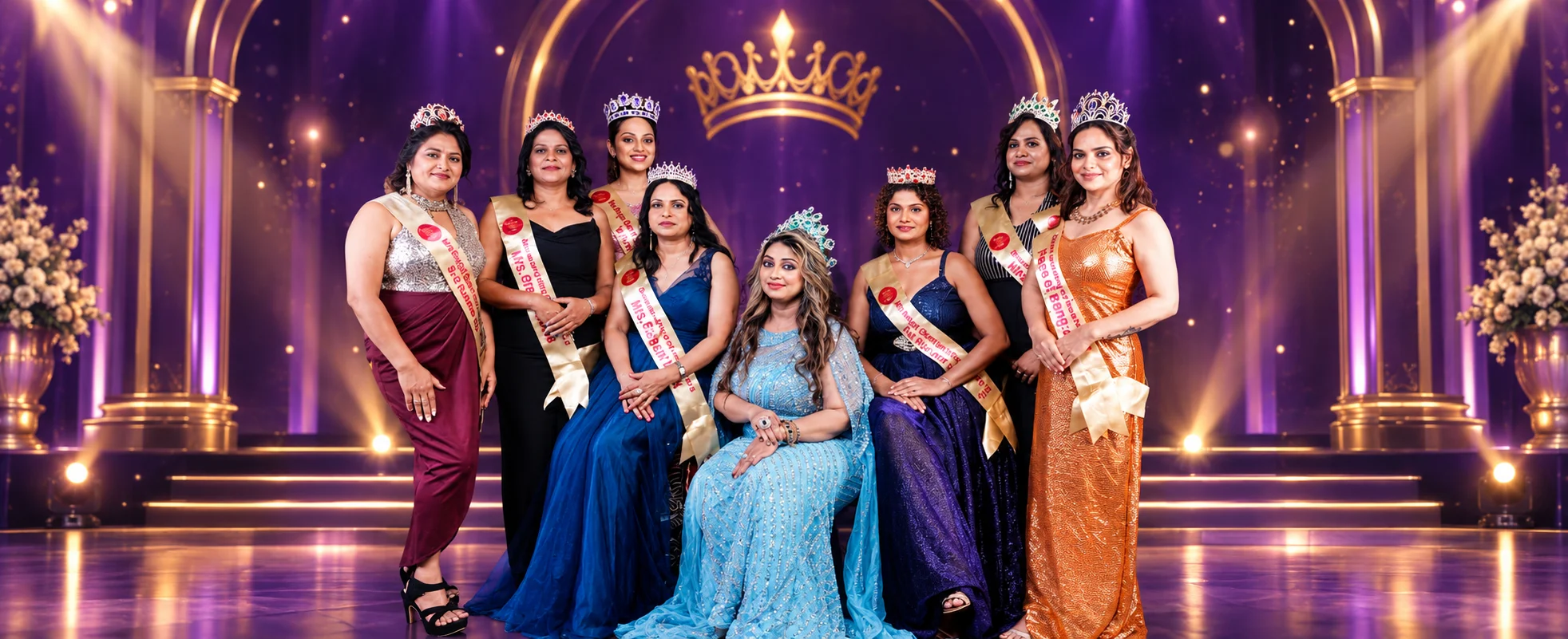
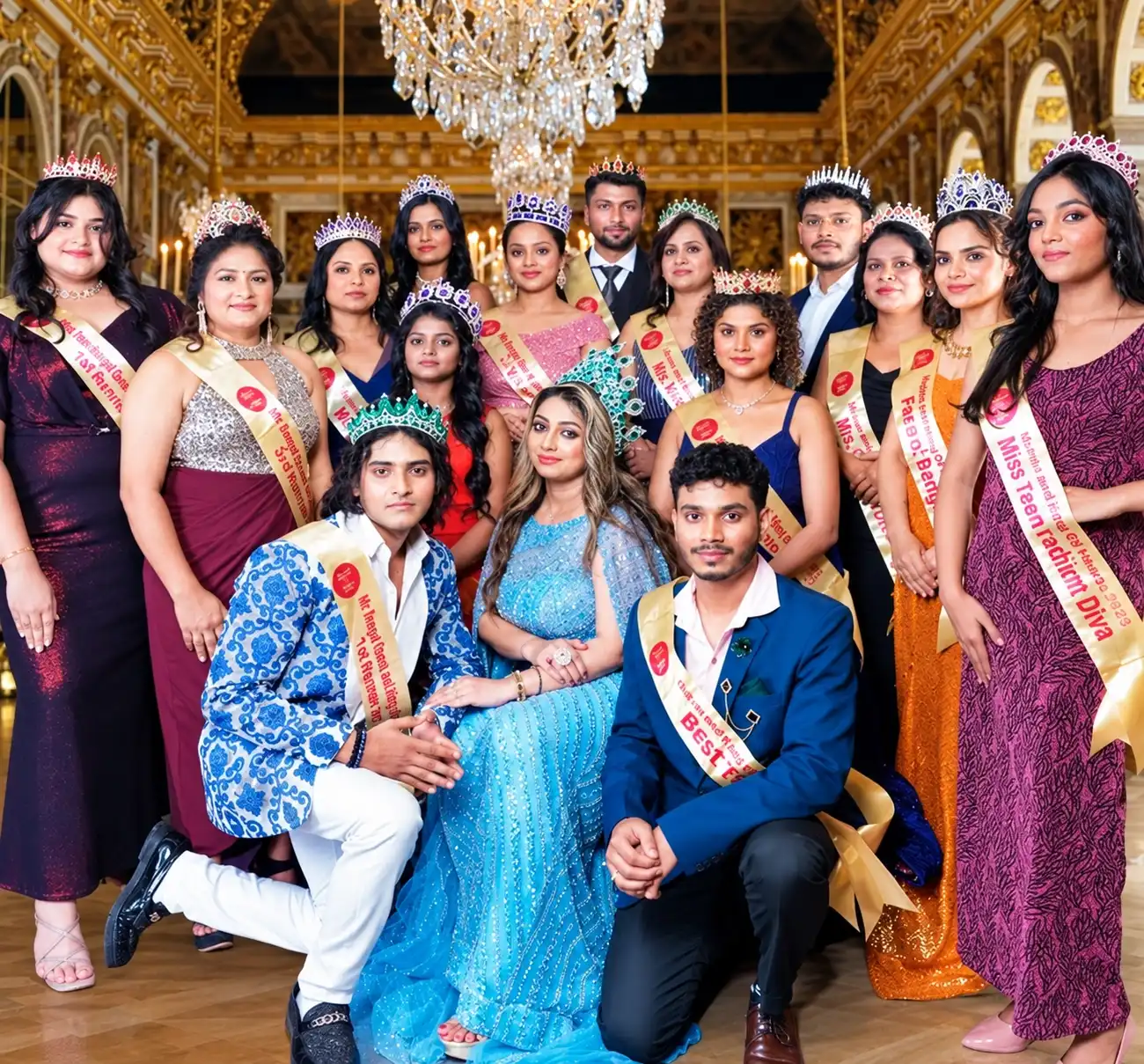
The most important structural decision in this format is the breadth of its categories. Most national pageants run a Miss and a Mrs division, sometimes adding a Mr division when organizers want to grow. Queen & King of Hearts runs Miss, Mrs., Mr., Teen, and Kids in one season, so a fourteen-year-old, a working professional, a mother of three, a widowed woman in her forties, and a young boy all compete in a structure built to give each a fair chance.
Miss category: The flagship division and the most competitive field, open to young women across a broad age band. Contestants are evaluated on stage presence, communication, personality, and purpose.
Mrs. category: This division exists because married women, single mothers, divorced women, and widows are routinely excluded from pageants that assume youth. Eligibility welcomes married, separated, single, divorced, and widowed participants, and life experience is treated as a strength rather than a liability.
Mr. category: Male contestants compete on the same principles as the women's divisions, with identical grooming and training.
Teen category: Built for contestants in their early and mid teens, this division focuses on grooming fundamentals, posture, and soft skills, with parents involved. It asks for a lighter touch and real care.
Kids category: This division is about participation, presentation, and the joy of a large stage, not competition in the harsh sense. It exists because introducing children to discipline and self-expression early is one of the most valuable outcomes of a platform.
Why multiple categories matter to you: If you are a thirty-eight-year-old mother, a man who has never modelled, or a teenager not yet eighteen, a matching category means you compete against people at a similar life stage, which makes confidence achievable.
Eligibility here is refreshingly open, and understanding it early removes most of the anxiety that keeps people from applying. The published criteria welcome adult contestants across a wide age span, with separate Teen and Kids categories for younger applicants. A minimum height of five feet applies to the relevant divisions, a runway convention rather than a judgement of worth. There is no weight bar, no marital-status barrier, and no language restriction. Each point matters because most rulebooks quietly exclude exactly the applicants who would benefit most.
Age: Rather than treating age as a barrier, the organization splits age bands into categories, so a twenty-two-year-old and a forty-two-year-old are judged against peers.
Height: A minimum of five feet applies to the relevant divisions, a practical runway requirement tied to formal footwear and stage dimensions rather than a judgement about anyone's worth.
Weight: There is no weight bar, and the choice is deliberate. Weight criteria are quietly used by many pageants to filter applicants, so the absence of one signals an intention to judge presence and character instead of a number on a scale.
Marital status: Married, separated, single-parent, divorced, and widowed contestants are all welcomed in the Mrs. division, one of the most progressive eligibility clauses in Indian pageantry. It reflects a reality that many of the most compelling women on any stage have already carried significant responsibility.
Language: Any language is accepted, including English, Hindi, Punjabi, Bengali, and Marathi, so a contestant more comfortable in Bengali or Punjabi than in English is not put at a disadvantage.
Beyond the formal criteria, they look for someone willing to be coached, someone curious, someone able to hold eye contact with strangers and say something true. None of that requires a modelling background or a particular body type, and all of it is learnable in a short program.
Training is the backbone of the Queen & King of Hearts experience. The curriculum addresses the body, the voice, the mind, and the camera, because a pageant stage demands all four at once.
Ramp walk training: The walk is the most visible element, and the one most candidates practise alone, without feedback. Professional ramp walk training corrects posture, foot placement, shoulder line, the turn at the end of the catwalk, and holding a pose while photographers shoot from three angles. Practicing alone teaches habit, not technique, which is why guided training shows visible improvement within a few sessions.
Stage presence: How a contestant uses the full depth of a stage rather than its front edge, how she holds a standing pose, and how she recovers when something goes wrong. Judges notice composure, and a contestant who stumbles and recovers gracefully often outscores one who never stumbled.
Communication: Contestants are trained to speak about themselves with clarity and warmth, to answer questions under observation, and to hold a conversation with judges rather than recite a speech. Most amateur auditions fail here, and coaching produces the gains.
Interview preparation: The interview round carries as much weight as the evening gown in most formats. Preparation covers the common question patterns, from background and motivation to platform and views on current issues, and builds short, honest answers rather than rehearsed speeches. Good preparation does not make a contestant sound like someone else. It lets them sound like themselves on a good day.
Styling: Stylists work with contestants on outfit selection, colour, silhouette, hair and makeup for each round. Many first-timers do not know what suits them, and guidance prevents the expensive mistake of a good outfit in the wrong colour for the body wearing it.
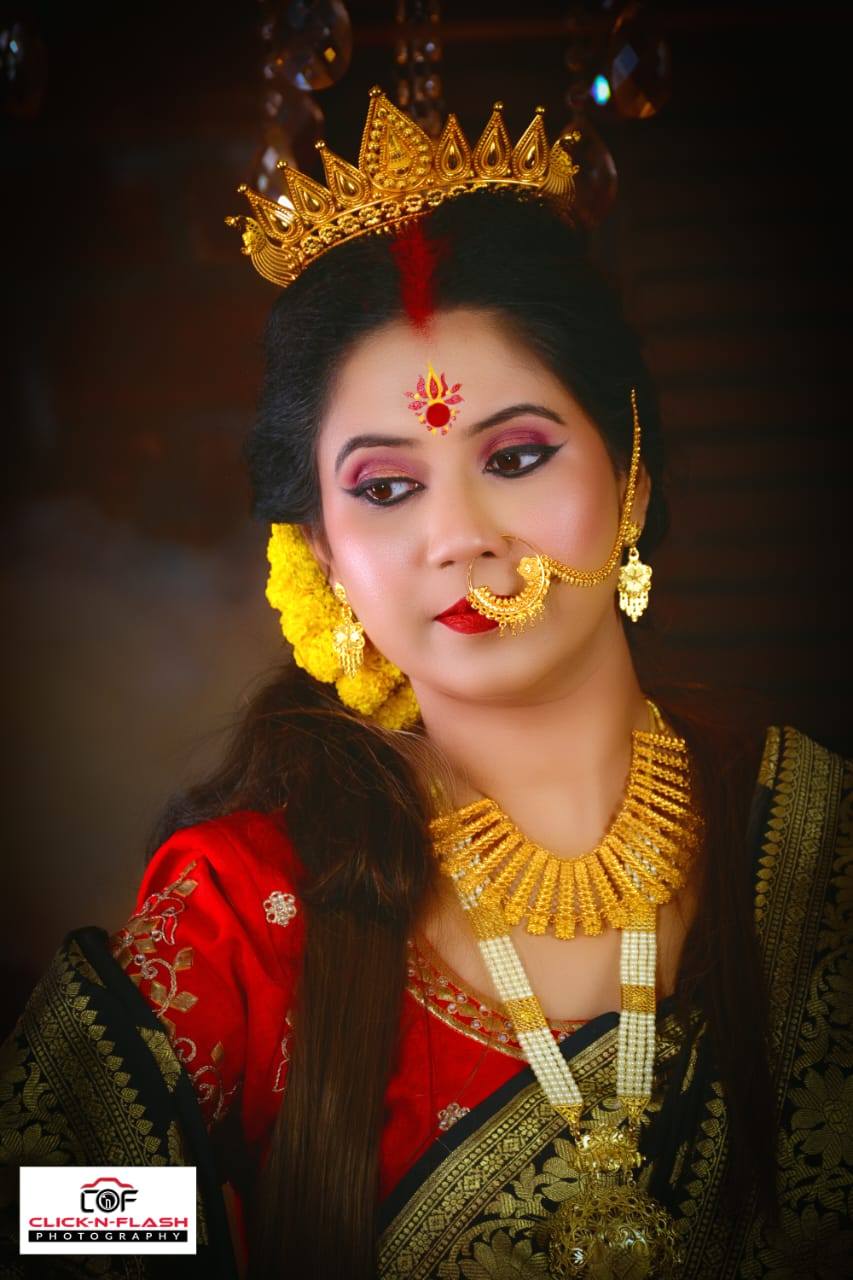
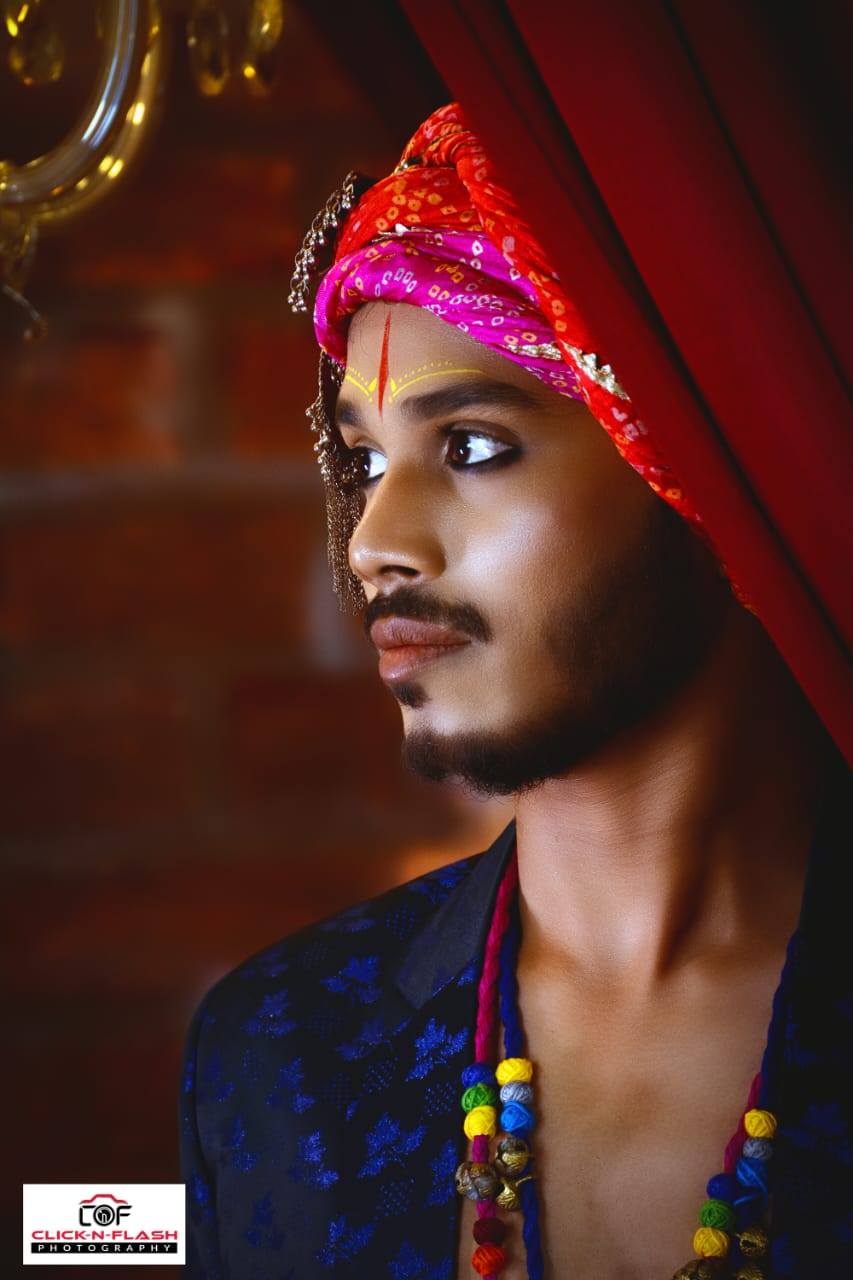
Photography and promotion: Contestants receive photoshoots that supply portfolio material long after the pageant ends, plus promotion support that matters more in 2026 than ever before. An audience that discovers you through the pageant and then finds you afterwards is worth far more than a crowd that saw you once.
Knowing how a pageant runs removes most of the intimidation. Each stage has a purpose beyond eliminating contestants, and understanding it helps you decide how much to invest where.
Registration: Eligibility is checked, the fee is paid, and an audition place in your category is secured. The season's practical information reaches you here too.
City and regional auditions: Auditions run in multiple cities, so no contestant crosses the country for a first round. Each involves a walk, a brief interaction with judges, and an observation of grooming readiness. It is a friendly but genuine assessment, and where first-timers often discover they are more nervous than they believed and more capable than they hoped.
Grooming and training: Selected contestants enter the training programme, the longest and most valuable phase, where they are grouped, coached, photographed and prepared round by round.
Zone rounds: Zone competition narrows the field while giving each contestant meaningful stage time more than once, diluting the influence of a single bad night.
The national finale: The strongest contestants across categories come together for an evening that is both competition and showcase, with titles awarded and media coverage peaking. After it, alumni, social media and outreach work continue to give former contestants platforms of their own.
Cost stops more aspiring contestants than any other question, and clarity here is worth more than reassurance. The published registration fee is INR 2,500, and understanding what it covers lets a family plan properly instead of discovering costs later.
What the fee covers: Application processing, the audition slot, basic screening, and the selection overhead required to run auditions across multiple cities. It is the entry point to the season, not the complete cost of participation.
Training costs separately: Grooming and training costs depend on the programme chosen and the support a contestant wants. In the Indian pageant market generally, these fees are paid only after selection, spreading cost across the season rather than front-loading it. If you are comparing pageants, ask whether training is bundled. Honest answers to that question are a strong signal of an honest organisation.
The comparison that matters: Registration fees across Indian national pageants sit in a broad band, with prominent franchises charging several times more for an application alone. The right comparison is not the cheapest fee but the value returned: how many training sessions, whether styling and photography are included, and what the alumni network is worth. A pageant charging more while delivering structured training and real media exposure can be cheaper across a season.
A practical budget note: Budget also for ramp footwear, stage-appropriate outfits, travel to the audition city, and personal grooming between sessions. These are rarely in the headline fee, and planning for them removes stress at the moment it is least useful.
Two programmes run alongside the competition, and they tell you what kind of organisation you are applying to. The first is a non-profit outreach programme focused on community empowerment and advocacy for underprivileged groups. The second is an international network connecting participants, mentors and supporters across countries.
The outreach programme is tied to the reason the pageant exists. A platform that crowns people while ignoring the conditions around them would be ordinary. One running projects for underprivileged communities alongside its seasons makes a different argument about what a pageant can be. Contestants often find that involvement changes their own sense of purpose, and several have continued the work afterwards.
International collaboration is more useful to a contestant. Through partnerships abroad, participants meet different judging cultures, styling standards and stage formats. For a contestant from India, that means learning how pageantry works elsewhere rather than within one national idiom, and for the organisation it means a standing platform rather than a one-off event.
Registration for the 2026 season is open, and the process is straightforward. The most useful preparation happens before you fill in any form, starting with deciding honestly which category you belong in rather than which one you think you should.
Choosing your category: Select the division matching your age and life stage, because categories are judged within themselves. You gain more competing fairly in your own band than in a division stacked against you.
Preparing your walk: Practice in comfortable heels before audition day. Walk toward a wall, stop, turn and hold, watching yourself on your phone's front camera. The goal is comfort rather than perfection, because a relaxed contestant reads as confident.
Preparing your conversation: Judges want something true about you. Write down three facts about your life, work or community that you would be glad to say out loud, and say them aloud until the words stop feeling rehearsed.
Preparing emotionally: Auditions are nerve-wracking, and pretending otherwise is not strength. Expect to be nervous, expect to be judged quickly, and know that everyone in the room feels the same way, favourites included. Confidence is not the absence of that feeling. It is acting anyway.
What to bring: Comfortable footwear, water, a powder compact, and any requested documents. Expect a walk, a brief judge interaction, and a courteous reception either way. Not advancing in round one says little about your future and quite a lot about the number of applicants.
Indian pageantry in 2026 is expanding faster than at any point in the country's history. Franchises, state events and city contests run every month, and international arrangements have brought new competition to aspirants who a decade ago had a handful of options. Growth is good for contestants, but it has brought noise, and the noise is claims rather than substance.
Against that background, the case for Queen & King of Hearts rests on things that are verifiable. It is run by a registered company with a named director of international standing. It publishes eligibility criteria that are genuinely broad rather than aspirationally broad. It runs five categories in a season, including divisions most events treat as an afterthought. It attaches training, styling, photography and promotion to the competition, and it keeps an international collaboration network rather than hosting a single international guest.
There is a regional dimension worth naming. Kolkata has a long history of producing contestants who compete at the highest level and supports a genuine modelling ecosystem. A Kolkata-based national pageant draws on that in a way a pageant with no local root cannot, giving contestants access to mentors who are actually reachable.
What this pageant asks of you: Not perfection, but participation, coachability and willingness to be seen before you feel ready. Contestants who get the most out of a pageant are rarely the most conventionally attractive entrants. They are the ones who arrive willing to work, absorb feedback honestly, and keep showing up through rounds where nothing is guaranteed.
If you are reading this and recognising yourself in it, that recognition is worth more than any eligibility line on any rules page. Registration for the 2026 season of the Queen & King of Hearts beauty pageant is open now. The auditions will not wait for you to feel completely ready, because the contestants who wait are the ones who never walk. Bring the voice you already have, take the training seriously, and let the season do what seasons do.

A premium platform for aspiring models and performers. Discover grooming, runway excellence, and global exposure designed to transform confidence into presence.
Apply Now →
The Queen & King of Hearts Beauty Pageant 2026 is the most awaited national-level event organized by The Bengal Tigers Entertainment & Media Pvt. Ltd., dedicated to celebrating inner beauty, talent, and confidence. With a vision to create a platform that empowers individuals to showcase their true potential, we bring together aspiring models, performers, and individuals from across India.
Our pageant offers a comprehensive grooming and development experience that covers ramp walk training, stage presence, communication skills, styling, and interview preparation. Led by industry experts and renowned mentors, participants receive personalized guidance to enhance their confidence and presentation abilities. We believe in nurturing talent and providing opportunities that extend beyond the stage, opening doors to national and international platforms.
The Bengal Tigers Entertainment & Media Pvt. Ltd. has been at the forefront of organizing successful events that promote talent, culture, and entertainment. With a commitment to excellence and a passion for creativity, we strive to create memorable experiences for both participants and audiences. Our team works diligently to ensure that every aspect of the pageant reflects quality, professionalism, and integrity.
At the heart of our pageant lies a philosophy of empowerment and self-discovery. We encourage participants to embrace their uniqueness, build self-esteem, and pursue their dreams with determination. The Queen & King of Hearts Beauty Pageant 2026 is more than just a competition; it is a celebration of beauty in all its forms, a platform for growth, and a journey of transformation.
Stay updated with the latest news, stories, and insights from our community.
Pageants are about much more than beauty. They celebrate confidence, personality, communication, intelligence, grace, and the ability to make a positive impression. While contes...
Get answers to your questions about our services & events. We're here to help!
If you are still unsure, the most useful next step is more information rather than more encouragement, because encouragement does not resolve practical doubts. Write down what is actually holding you back, and you will usually find it is one of a few specific things: fear of being judged, the fee, worry about eligibility, uncertainty about whether you will be good enough, or the belief that pageants are not for people like you. Each has an answer. Fear of judgement gets smaller once you watch an audition and realise how ordinary and conversational it is. The fee becomes manageable once you know it separates from training cost. Eligibility you can check against the published criteria in a minute. Whether you will be good enough has no answer in advance for anyone, which is exactly why training exists. If you have a specific doubt that is not on this list, message the organizers and ask it plainly; legitimate pageants answer direct questions quickly. What you should not do is sit on the decision indefinitely. Registration for the 2026 season is open now, and the contestants who wait for that feeling are the ones who never walk.
The confidence gains from a pageant are usually reported as more ordinary and more durable than contestants expect. Ramp walk training builds posture awareness, and once you have spent weeks consciously correcting how you stand and move, that awareness does not switch off when the pageant does. Interview preparation makes public speaking a habit, and a habit formed under coaching is far easier to carry into a workplace, a college seminar, or a difficult conversation at home. Learning to work with photographers and stylists teaches you to be comfortable being looked at and assessed, which turns out to be useful in professional life far more often than anyone anticipates. Grooming and styling work raises self-care to a discipline. And the community is real: a group of people who worked hard together and understand what it cost you is a circle worth keeping. What it does not do is make you a different person. What it does is make you a version of yourself with more skill, more composure, and better habits, which is a quieter and more durable thing than a title, and the people who get the most from it usually describe it in exactly those terms.
You are exactly who this pageant is built for, and if you have been hesitating because of your age, your size, or your lack of experience, that hesitation is the main thing holding you back. The Mrs. category explicitly welcomes married, separated, single-parent, divorced, and widowed contestants, and there is no weight bar in the eligibility criteria at all. Categories are judged within themselves, which means a woman in her forties is not competing against twenty-year-olds but against women in a similar life stage, and that difference in context changes how the whole experience feels. A widowed woman who has raised a family and carried a career has exactly the kind of substance these judges look for, and the fact that most mainstream pageants quietly exclude her is a complaint about those pageants, not about her. Contestants regularly tell us the category structure was the reason they applied. Nobody arrives with stage experience. If you are wondering whether you are too new, too old, or too different, the eligibility criteria give you your answer. The only remaining question is whether you register this season or let another one pass.
A pageant can open doors into modelling and media, but it is a launchpad rather than a career, and treating it as anything more than that leads to disappointment. What it realistically gives you is structured training in walk, posture, camera work, and expression; a portfolio from the photoshoots; and an introduction to a network containing photographers, stylists, designers, choreographers, and media contacts. That combination is genuinely valuable to someone starting out, because it compresses years of self-teaching into a few months of guided practice. What it does not give you is work. Modelling in India is freelance and competitive, agency representation is selective, and titles do not guarantee bookings. Media is similarly straightforward to enter and difficult to sustain. The contestants who convert a pageant into a working career are the ones who treat the pageant as training and credentials, then keep building a portfolio, an Instagram presence, and a professional attitude afterwards. Parents and contestants who expect a crown to arrive with a contract attached tend to be disappointed. Those who expect coaching, contacts, and a portfolio tend to be pleasantly surprised.
This is where pageants separate from each other most clearly, and it is worth asking about before you register rather than assuming. Many competitions end abruptly the night of the finale, handing back photographs and a certificate, after which the organizers disappear until the next edition is announced. Queen & King of Hearts runs alumni, social media channels, promotional partnerships, and the outreach program as continuing structures, which means former contestants retain platforms for their own work well after their season finishes. Practically, that means an alumni network with other former contestants, access to promotional opportunities tied to the organization, and a relationship with a team that continues to invest in participants rather than treating them as finished assets. Many titleholders have said the network was as valuable as the crown, because it is where collaborations, referrals, and friendships come from. If long-term value matters to you, ask a former contestant rather than a brochure for the truth, and ask specifically what contact and support existed six months and one year after their season ended. That answer is the honest measure of what you are buying.
International collaboration at Queen & King of Hearts is a standing relationship rather than a single guest appearance. Through partnerships with pageant organizations and collaborators abroad, the platform connects participants, mentors, and supporters across countries, creating what the organization describes as a global network. For a contestant, this is more useful than it might first appear, because it exposes you to different judging cultures, styling standards, and stage formats. Indian pageantry has its own conventions, and while they are effective, walking confidently into an international format is easier when you have been exposed to more than one set of expectations. The collaborations also broaden the mentoring pool, bringing approaches to stage craft and presentation that a contestant could not otherwise access from within a single national ecosystem. For the organization, the value is durability: a standing international network means the platform persists across seasons rather than resetting annually. If you are searching for a pageant with reach beyond its home city, this is the part to investigate, and asking the organizers which collaborations are active this season, rather than which ones existed years ago, will tell you whether the program is running or merely mentioned.
The nonprofit outreach program is tied closely to the organization's stated reason for existing, and it focuses on community empowerment and advocacy for underprivileged groups. This is not a decorative line in a brochure. A platform that crowns people while ignoring the conditions around them would be an entirely ordinary enterprise, and the organizers here have made a different argument about what a pageant can be. The work runs alongside the competition rather than after it, with charity projects and community initiatives active across the season. For contestants, involvement in this work often changes something internal. Several participants have said that the moment they understood the outreach side, their own sense of purpose in entering the pageant shifted, and a number have continued the work independently after their pageant years ended. If you are deciding between pageants, ask what happens beyond the competition and listen carefully to the answer. An answer that only describes the next edition and next season describes an event business. An answer that includes community work, mentorship, and continuing relationships describes a platform, and the difference will shape what your registration is actually supporting.
The Queen & King of Hearts beauty pageant is organized by The Bengal Tigers Entertainment & Media Pvt. Ltd., a registered private limited company in India, and that is the first thing to verify. Registration details for a company can be checked, and if you are considering registering, you should check them rather than take them on trust. The things worth asking the organizers for include the company's registered name and registration identifier, clear communication about which categories are running in the 2026 season, the eligibility criteria in writing, the registration fee and what it covers, and a refund or credit policy. Any organization unwilling to answer those questions plainly deserves a second look, and legitimate pageants answer them within a message or two. The broader indicators of legitimacy are also visible from outside: a named director with a traceable public record, previous seasons with identifiable winners, a physical address that resolves, outreach work that can be verified, and alumni who speak about their experience openly. Use those signals together. No single one proves anything, but a company that has all of them is doing something considerably more legitimate than one that has only a glossy poster.
The Bengal Tigers Entertainment & Media Pvt. Ltd. is the registered private limited company that organizes the Queen & King of Hearts beauty pageant, and that registration is more meaningful than it sounds. India's pageant industry contains a great many events that promise national platforms and deliver a banquet hall, and the difference between a professional organization and an opportunistic one usually appears in the paperwork well before the finale. A registered entity with a named director, published eligibility criteria, a defined training structure, and a calendar that can be planned against is accountable in a way that a single organizer's messaging app is not. The company builds events around talent, culture, and entertainment with an emphasis on production quality and professional conduct, which means the technical side is treated seriously: sound, lighting, stage design, backstage coordination, judge management, and the timing that keeps a multi-category finale moving without long gaps. Its stated philosophy centers on empowerment and self-discovery, and contestants meet that philosophy in the grooming room rather than in a speech. It also runs the outreach and international collaboration programs alongside the competition.
Dr. Pamela Pal Das is the director of the Queen & King of Hearts beauty pageant and the figure around which the whole organization is built. She is an internationally recognized titleholder who holds the titles Mrs. India Face of East, Mrs. Elite India, and Mrs. World United Nations, and she works as a peace ambassador for the Siam Foundation in Thailand. Those crowns carry weight in Indian pageantry because they were earned on stage, in the same arena where she now sits on the other side of the judging table. There is also a practical dimension that matters enormously to any contestant. Directors with genuine industry standing can open doors that no amount of individual effort opens, because mentors, photographers, designers, and media partners respond very differently to a pageant run by someone they respect. Her leadership is visible in how the pageant treats people, in the emphasis on grooming and development over crowns, and in the inclusive eligibility criteria. Contestants frequently describe the guidance she provides as personal rather than performative, which tells you something real about how the organization is run day to day.
Judging at a pageant of this kind assesses presence and personality rather than a fixed checklist of physical measurements, and understanding that shapes how you should prepare. Across the rounds, judges look at how a contestant carries herself on stage, which is the composite result of posture, walk, stage awareness, and the ability to hold a pose under lights and cameras. They assess communication and personality, meaning how clearly and warmly a contestant speaks about herself and how she responds when a question is unexpected. Purpose and values matter here more than in most pageants in India, because this organization has made character a stated criterion rather than a pleasant sentiment. Interview performance carries real weight, and preparation for it is conversation practice rather than recitation. Judges also look at consistency across multiple rounds, which is one reason a pageant with several rounds is fairer than a single evening, since a contestant who shines once and disappears cannot rely on a single impression. Personal presentation and grooming finish the picture. No single element carries the crown on its own, and the contestants who do best are usually those who are competent in all of them rather than exceptional in one.
Yes, and the multi-city audition structure exists precisely so that geography does not decide who gets a chance. Because auditions are held in more than one city, most contestants can attend an audition reasonably close to where they live rather than travelling across the country for a first round. If the nearest audition city still involves a journey, that is normal and manageable, and it is worth comparing the travel cost against the alternative of never applying at all. Two practical points are worth planning for. First, confirm the audition city and schedule for your category before you book anything, because dates for different categories and cities will not necessarily coincide. Second, treat the audition trip as more than the audition. If you can, arrive a day early. Watch an audition, get a feel for the venue and the pace, and walk in already knowing what the room feels like. Contestants who do this arrive composed rather than braced, and composure is visible from across a stage. Later stages of the season may require further travel for zone rounds and the national finale, which is normal for any national pageant and something to factor into your planning and budget.
You will be disappointed, particularly if you have invested effort and money in preparing, and that disappointment is entirely reasonable. What is worth sitting with afterwards is how little a first-round result actually measures about your potential. Audition rounds are shaped by numbers: how many people applied, how many places the round offers, and how the judges allocate those places on a given day. A warm, articulate contestant can be passed over on a crowded day simply because the panel needed to narrow the field quickly, and the person who advanced ahead of her may be equally inexperienced. Nothing about a first-round rejection changes what the training pipeline would have given you. Many contestants take the next season, enter with proper coaching behind them, and do considerably better, which is a far more common path to a title than a straight line through a single audition. If you want to make that next attempt count, ask the organizers what they observed, accept the feedback that is offered, and work on the specific weak point they identify rather than applying everywhere with the same preparation.
A first-round audition is shorter and gentler than most first-time contestants expect, and knowing the format helps you arrive calm rather than braced for judgement. You will walk, which may be a short ramp or a walk-and-pose in front of the judges, and then you will be asked some questions. Those questions are usually brief and conversational, covering where you are from, what you do, why you are applying, and what you want from the experience. Nobody expects a speech. Bring comfortable footwear you have already walked in, a second outfit option, water, and any documents the organization has asked for. Arrive early enough to watch an audition rather than only taking part in one, because seeing the format settle nerves faster than any amount of imagining does. Expect to be received courteously whether you advance or not, and hold onto that, because a large proportion of contestants who are not selected in round one return in a later season markedly stronger. The single thing that most reliably helps you is arriving with two or three true facts about yourself that you are glad to say out loud and saying them slowly.
The season runs as a structured progression with five distinct stages, and knowing the shape of it makes the whole thing feel far less mysterious. Registration comes first, where eligibility is checked and the fee secures an audition place in your chosen category. City and regional auditions follow, held in multiple cities so that contestants do not have to cross the country for a first round. The audition normally involves a walk, a brief interaction with judges, and an observation of general grooming readiness. Selected contestants then enter the grooming and training phase, which is the longest and most valuable part of the journey. From there, zone rounds narrow the field while giving each contestant meaningful stage time in more than one setting, which has the useful side effect of reducing the influence of a single unrepresentative night. The national finale brings together the strongest contestants across categories for an evening that functions as both competition and showcase, with titles awarded and the season's media coverage at its peak. The structure after the finale matters too, because alumni, promotion, and outreach continue to give former contestants platforms for their own work.
That fear is more common than you would guess, and it is one of the most thoroughly addressed concerns in professional grooming training because almost every contestant arrives with some version of it. Shyness is not a disqualification, and it is not a fixed characteristic. What training actually does is break one large, frightening act into a series of small, repeatable ones. Nobody is asked to become confident overnight or to perform a version of themselves that does not exist. In practice, that might mean speaking about yourself in front of two people before doing it in front of twenty, walking in a room where only a coach is watching before doing it on a lit stage, and noticing each small increment until the whole thing stops being overwhelming. The kindness of a well-run training group is that everyone else is nervous in exactly the same way, which turns the room into a place where anxiety is normal rather than shameful. If you have decided you are too shy, hold that thought lightly and come to the first session. The people who describe the biggest change in confidence rarely thought of themselves as outgoing before they started.
Photography support is part of the contestant journey here, and yes, the material you create during the season is designed to outlast the season itself. Contestants receive photoshoots as part of the program, and those images serve a practical purpose after the finale: they form the beginning of a portfolio usable for modelling auditions, casting submissions, personal branding, and social media, long after the event venue has emptied. The secondary benefit is equally valuable and less obvious, because learning to hold a pose and work with a camera changes how a person carries themselves in every photograph anyone takes of them afterwards. Shoot days also teach you how to work with photographers and stylists, which is a professional skill independent of pageants. When you compare pageants, ask specifically what photography is included, how many shoot days you receive, and whether you receive the edited files or only the proofs. Vague answers on this point are common. The organizers here treat visual documentation as part of the pipeline rather than an optional extra, and contestants frequently mention that the portfolio was what opened doors for them afterwards, sometimes more so than the crown.
The length of the program depends on how far you progress, because training in a pageant of this kind is organized around rounds rather than delivered as a fixed block. Preparation before your audition is brief, largely preparation rather than training, since most of the first session is spent on baseline work: your walk, your posture, how you speak under a judge's eye, and what styling suits you. Once you are selected, the structured grooming phase runs across the weeks leading to the first competitive rounds, with contestants typically attending scheduled sessions and practicing between them. The repetitions matter more than the hours. A contestant who attends every session but practices nothing at home will plateau quickly, while one who practices daily for short periods will visibly improve over the same span. As the season progresses and rounds narrow, training becomes more specific to the round you are approaching, which usually means ramp work intensifies before a walking round and interview coaching intensifies before a judged conversation. The honest summary is that the serious work runs for weeks rather than a weekend, and the contestants who get the most from it are the ones who commit to the full calendar.
No, and this is the single most common misconception that keeps capable people out of pageants they could genuinely compete in. The overwhelming majority of contestants at any first season have never walked a professional runway, and organizers know it, which is precisely why the training program exists. Judges are not looking for technical perfection at an audition. They are looking for coachability, presence, and the willingness to be seen, and a contestant who has never done this before but who stands straight, speaks warmly, and accepts feedback without defensiveness often outscores one who arrived with a few competitions behind her. Practicing alone at home, unassisted and unobserved, builds habit rather than technique, and it will not correct the small postural habits that a trained eye spots immediately. If you are genuinely worried about the gap in your experience, that gap is what the grooming and training pipeline is designed to close. Come with an open mind, take correction well, and put in the practice between sessions. Several titleholders in this pageant's history entered their first season with no experience at all, and the ones who did well were the ones who arrived ready to work.
The training program is the reason this pageant exists in its present form, and it covers four areas of a contestant's development: the body, the voice, the mind, and the camera. Ramp walk training covers posture, foot placement, shoulder line, the turn at the end of the catwalk, and the ability to hold a pose while photographers work from several angles. Stage presence training addresses how a contestant uses the full depth of a stage rather than its front edge, how she holds a standing pose, and how she recovers when something goes wrong. Personality development and communication work focuses on speaking clearly about herself under observation, which is where most amateur auditions fall apart and where coaching produces the largest gains. Interview preparation builds short, honest answers rather than rehearsed speeches. Add styling support with professional input on outfit, color, silhouette, hair, and makeup, plus photoshoots that build a portfolio, and you have a program designed for someone starting from zero rather than someone already in the industry.
Refund policies vary considerably between pageant organizations, and this is exactly the kind of detail worth confirming in writing before you pay rather than assuming. Registration fees in Indian pageants typically cover application processing, the audition slot, and screening overhead, and those costs are genuinely incurred whether or not a contestant is selected, which is why refund terms vary from fully non-refundable to partial credit or conditional. Rather than guess, ask the organisers directly and get the answer before you pay. Ask two specific questions: is the fee refundable at all, and if it is not fully refundable, is the amount credited toward training or future participation if you apply again in a later season? Some organizations do offer exactly that, and it meaningfully changes the effective cost of trying. If you are registering for the first time and the fee feels significant, that is a legitimate reason to pause and read the terms rather than an indication that you should not apply. Many contestants who were not selected in an early round return in a following season with markedly better preparation, and knowing whether any part of your investment carries forward is worth knowing before you start.
Document requirements for pageant applications in India are usually modest, and this one follows the same practical pattern. Expect to provide basic identity information, a contact address, and recent photographs that show your face clearly and reflect how you currently look. Government photo identification is commonly required, and you should keep it available for the audition day itself rather than only for the online form. If you are applying in a category where parental consent is needed, which applies to the Teen and Kids divisions, a guardian's signature or presence at the audition will be part of the process. Parents of younger contestants should also be prepared to attend sessions, because the training schedule for those categories is structured around school hours and guardian availability. A useful piece of advice from people who have registered before: Finish the photograph set properly rather than quickly. Three clear photographs taken in decent light, front-facing and full length, will serve you far better than six rushed ones uploaded in a hurry. If anything about the documentation is unclear to you, ask before you submit rather than after. A short message to the organizers resolves most of these questions in a single exchange.
This is a fair question, and the honest answer is that you should register for the category that genuinely matches where you are in life rather than treating multiple entries as a strategy. Categories at Queen & King of Hearts are judged within themselves, which means a teen contestant is not competing against a Mrs. contestant, and a Mr. entrant is not competing against a Miss entrant. Registering for two divisions places you in two separate fields, each with its own competition, and it also splits the training time you have available across both. That split is where most multi-entry contestants quietly lose, because ramp walk coaching, styling sessions, and interview preparation each need repetition to take hold. If you genuinely sit between two categories, the sensible route is to speak to the organizers before registering and ask how they handle it, because rules on this vary between pageants, and you want clarity rather than an assumption. What is not in doubt is that the categories are broad. A thirty-eight-year-old woman, a man who has never modelled, a sixteen-year-old, and a widowed grandmother all have a division designed for them in the same season.
The eligibility criteria are deliberately wide, and that is the first thing worth understanding about this pageant. Contestants are accepted across a broad adult age band, with separate Teen and Kids categories for younger applicants. A minimum height of five feet is stated for the relevant divisions, which is a practical runway convention rather than a judgement about anyone. There is no weight bar at all. Marital status is not a barrier, and the Mrs. category explicitly welcomes married, separated, single-parent, divorced, and widowed contestants. Language is not a restriction either, with English, Hindi, Punjabi, Bengali, Marathi, and others all accepted, which matters enormously when auditions are held in several cities. Beyond the formal criteria, the organizers describe what they look for in behavioral terms: someone willing to be coached, someone curious, someone able to hold eye contact with a room of strangers and say something true. None of that requires a modelling background or a particular body type. If you have ever assumed pageants are not for people like you, that assumption, rather than the rules, is the thing standing in your way.
The published registration fee for the 2026 season of the Queen & King of Hearts beauty pageant is INR 999. That figure covers your application processing, your audition slot, the basic screening carried out at the audition, and the selection overhead that lets auditions run across multiple cities in a single season. It is worth being clear with yourself about what it is and is not, because honest budgeting removes a lot of pre-event stress. The registration fee gets you into the audition round for your chosen category. It does not by itself cover the full grooming and training program, which is a separate investment and is typically payable once you have been selected. If you are comparing this pageant with others, ask any organizer directly whether training is bundled into the fee or charged separately and how the cost changes if you progress further into the season. Families in Kolkata who have been through this process will tell you that the value of the training pipeline, with its ramp walk coaching, styling, photography, and interview preparation, is where the real return sits. The fee opens the door; the season decides how far you go.